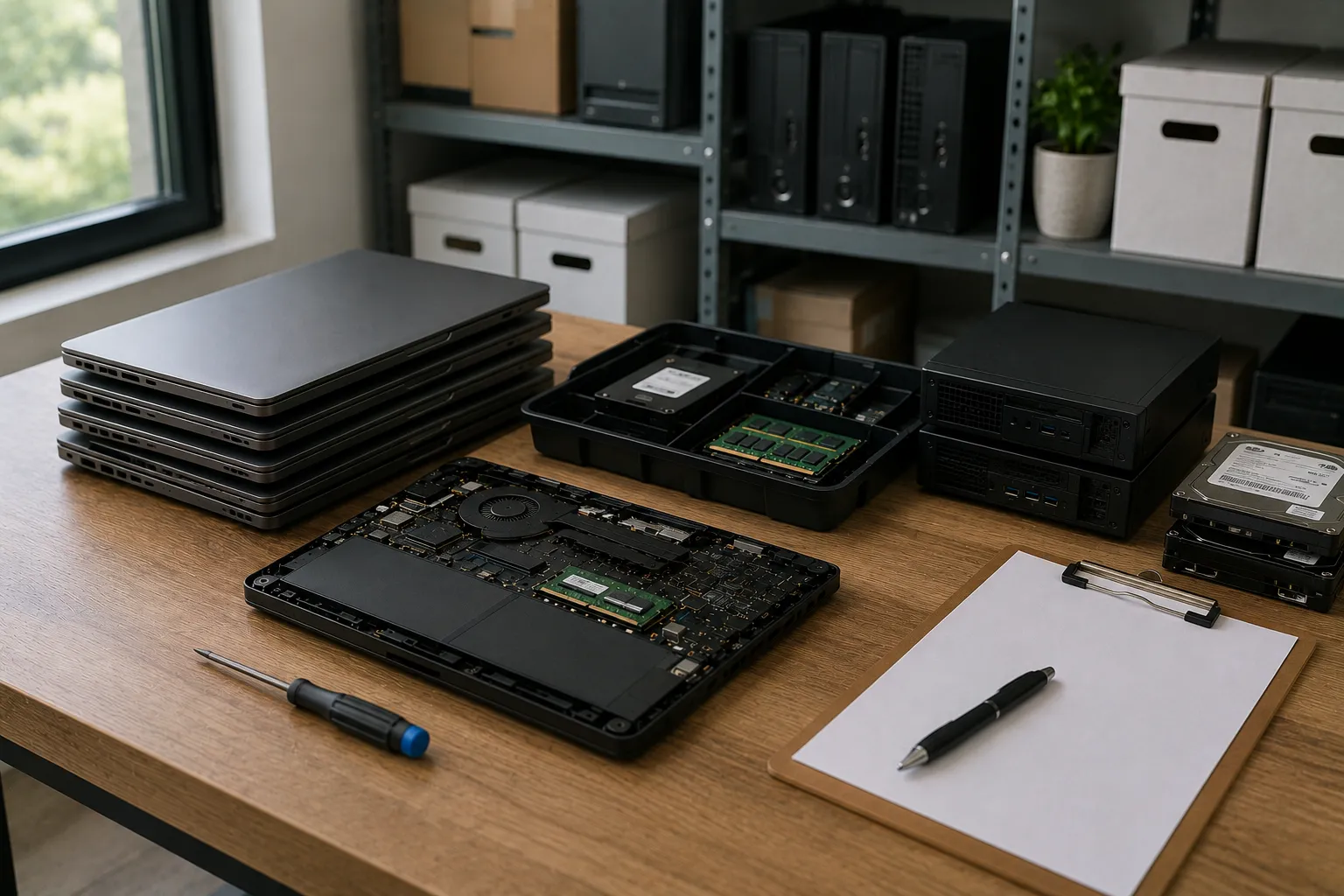
Every organization eventually faces the same challenge: what should happen to technology assets after they are replaced?
Computers are upgraded.
Employees receive newer devices.
Servers reach the end of their operational role.
Infrastructure is modernized to support changing business needs.
While replacing technology is necessary, retirement does not always mean the equipment has reached the end of its useful life.
Many organizations still have technology assets that can continue providing value through proper assessment, data sanitization, repair, and refurbishment.
Without a structured approach, retired technology may be:
- Stored indefinitely in warehouses or storage rooms
- Disposed of before its remaining value is evaluated
- Sent directly for recycling despite potential reuse opportunities
This can result in:
- Increased electronic waste
- Lost recovery opportunities
- Unnecessary demand for new equipment production
- Reduced return on technology investments
Technology refurbishment provides a more sustainable alternative.
Instead of treating retired equipment as waste, refurbishment restores suitable devices so they can continue serving a purpose.
By extending the useful life of technology assets, refurbishment supports the principles of the circular economy — an approach focused on keeping products, components, and materials valuable for as long as possible.
Within a broader Information Technology Asset Disposition (ITAD) program, refurbishment helps organizations balance three important goals:
- Protecting sensitive information
- Recovering remaining asset value
- Reducing environmental impact
Rather than viewing retirement as the end of an asset's journey, modern organizations are increasingly recognizing it as an opportunity to recover value and support sustainability objectives.
Understanding the Circular Economy
What Is the Circular Economy?
The circular economy is a model designed to reduce waste by keeping products and materials in use for longer periods.
The traditional approach to manufacturing often follows a linear model:
Extract Resources
↓
Manufacture Products
↓
Use Products
↓
Dispose
This model can result in significant resource consumption and waste generation because products are often discarded after their first useful life.
The circular economy follows a different approach:
Design
↓
Manufacture
↓
Use
↓
Repair
↓
Refurbish
↓
Reuse
↓
Recover Materials
↓
Recycle
The objective is to preserve the value of products and materials for as long as practical.
For technology assets, this means a retired laptop, server, or networking device should not automatically be considered waste.
Instead, organizations can evaluate whether the asset can:
- Continue serving the original organization
- Be redeployed for another purpose
- Be refurbished for another user
- Be resold through appropriate channels
- Provide components or materials for recovery
Refurbishment plays an important role because it keeps technology products in use longer before they move toward material recovery.
Why Technology Refurbishment Matters in the Circular Economy
Technology products require significant resources to manufacture.
The production of computers, servers, and electronic devices involves:
- Raw materials
- Energy consumption
- Manufacturing processes
- Transportation
- Packaging
When organizations replace equipment earlier than necessary, the value already invested in those resources may be lost.
Refurbishment helps address this challenge by extending the operational lifespan of existing technology.
For example:
A company may replace several hundred laptops during a hardware refresh cycle. These devices may no longer meet the performance requirements of their original users, but after proper testing and upgrades, many may still be suitable for:
- Administrative work
- Secondary departments
- Educational programs
- Smaller organizations
- Other less demanding applications
By extending equipment life, refurbishment helps maximize the value already created during manufacturing.
What Is Technology Refurbishment?
Technology refurbishment is the process of restoring used or retired equipment so it can continue operating effectively.
Refurbishment involves more than simply cleaning old devices or making them look newer.
A professional refurbishment process evaluates whether equipment is reliable, functional, and suitable for continued use.
Typical refurbishment activities may include:
- Asset assessment
- Inspection
- Data sanitization
- Hardware testing
- Cleaning
- Component replacement
- Software preparation
- Quality assurance checks
The objective is to return equipment to a condition where it can provide reliable service again.
The exact refurbishment process depends on factors such as:
- Equipment type
- Age of the device
- Technical condition
- Intended future use
- Security requirements
A business laptop being prepared for another employee may require a different process from enterprise servers being prepared for secondary markets.
Refurbishment as Part of IT Asset Disposition (ITAD)
Refurbishment is an important part of ITAD, but it is only one possible outcome within the larger asset disposition process.
A responsible ITAD program evaluates each retired asset and determines the most appropriate next step.
Possible outcomes include:
Internal redeployment
Using equipment again within the organization.
Refurbishment
Restoring equipment for continued use.
Resale
Recovering financial value through secondary markets.
Parts recovery
Removing usable components from equipment that cannot be fully restored.
Recycling
Recovering materials from equipment that has reached the end of its practical use.
Secure destruction
Used when security requirements or technical limitations make other options unsuitable.
The goal is not simply to avoid recycling.
The goal is to select the most responsible option based on security, environmental impact, and remaining asset value.
Refurbishment vs Recycling: Understanding the Difference
When organizations retire technology assets, one common question is:
Should the equipment be refurbished or recycled?
The answer depends on the condition of the equipment, security requirements, business needs, and environmental considerations.
Refurbishment and recycling both play important roles in responsible technology management, but they serve different purposes.
Recycling
Recycling focuses on recovering materials from technology equipment that can no longer be practically reused.
During recycling, equipment is processed to recover materials such as:
- Metals
- Plastics
- Glass
- Electronic components
These recovered materials can then be used in future manufacturing processes.
Recycling is an important part of responsible IT asset management because it prevents unnecessary disposal and helps recover valuable resources.
However, recycling generally occurs after reuse and refurbishment options have been evaluated.
When a device can still provide useful service, keeping it in operation usually preserves more value than immediately processing it for materials.
Refurbishment
Refurbishment focuses on extending the useful life of technology equipment.
Instead of breaking down a device for materials, refurbishment restores the equipment so it can continue serving another purpose.
Examples of refurbishment activities include:
- Repairing damaged components
- Replacing worn parts
- Upgrading memory or storage
- Testing hardware functionality
- Cleaning equipment
- Preparing devices for new users
A properly refurbished device can continue supporting business operations, educational programs, community initiatives, or secondary markets.
Refurbishment preserves more of the original product value because the equipment itself continues to be used.
Choosing the Right Outcome
A responsible ITAD strategy does not automatically choose refurbishment over recycling or recycling over refurbishment.
The correct decision depends on the specific asset.
Organizations should consider:
- Is the equipment still functional?
- Can the device meet future user requirements?
- Is refurbishment financially practical?
- Are there data security considerations?
- Does the equipment contain components that require special handling?
The goal is to maximize value while maintaining security and environmental responsibility.
A useful hierarchy is:
- Redeploy internally where practical
- Refurbish suitable equipment
- Recover value through resale
- Recover usable components
- Recycle remaining materials
- Securely destroy assets when necessary
Why Refurbishment Supports the Circular Economy
1. Extending Product Lifespan
One of the greatest benefits of refurbishment is that it allows technology to remain useful for longer.
A device that no longer meets the needs of one organization may still be valuable in another environment.
Examples include:
- A corporate laptop reassigned to less demanding tasks
- A server repurposed for a different workload
- Refurbished computers supporting educational programs
Extending equipment life reduces the need to replace devices prematurely.
It also allows organizations to gain additional value from their original technology investment.
2. Reducing Electronic Waste
Electronic waste continues to increase as technology adoption grows worldwide.
Computers and electronic devices contain many different materials, including:
- Metals
- Plastics
- Glass
- Batteries
- Electronic components
When usable equipment is discarded too early, additional waste is created and the remaining value of the device is lost.
Refurbishment helps reduce unnecessary waste by keeping suitable equipment in circulation.
Equipment that cannot be refurbished can still move through responsible recycling channels where materials can be recovered.
3. Reducing the Need for New Equipment Production
Manufacturing new technology requires significant resources.
This includes:
- Raw material extraction
- Manufacturing energy
- Transportation
- Packaging
- Supply chain activities
Refurbishment does not eliminate the need for new technology, but it can delay replacement cycles by extending the life of existing equipment.
For example:
A refurbished laptop that remains operational for an additional two to three years reduces the immediate need for a new replacement device.
This supports more efficient resource use and helps organizations manage technology investments more responsibly.
4. Conserving Valuable Resources
Electronic devices contain materials that require significant resources to extract and process.
Examples include:
- Copper
- Aluminum
- Steel
- Gold
- Silver
- Other recoverable materials
By extending equipment life through refurbishment, organizations maximize the value already contained within those products.
When equipment eventually reaches the end of its practical lifespan, responsible recycling can recover materials for future use.
Together, refurbishment and recycling support a more sustainable technology lifecycle.
5. Creating Financial Value From Retired Assets
Technology represents a significant investment for most organizations.
When assets are retired, they may still have recoverable value.
Organizations can capture value through:
- Internal redeployment
- Refurbishment
- Resale
- Certified pre-owned programs
- Component recovery
Instead of viewing retired equipment only as a disposal cost, organizations can treat technology retirement as an opportunity to recover value.
This is one reason ITAD has become increasingly important for businesses managing large technology environments.
The Professional Technology Refurbishment Process
A professional refurbishment process follows structured steps to ensure equipment is secure, reliable, and suitable for continued use.
Step 1: Asset Collection and Assessment
The first step is determining what equipment is available and whether refurbishment is practical.
Assets are evaluated based on:
- Manufacturer and model
- Age
- Technical specifications
- Physical condition
- Current functionality
- Market demand
This assessment helps determine whether the equipment should be refurbished, redeployed, recycled, or processed through another disposition pathway.
Step 2: Data Sanitization
Before any device is reused, refurbished, or resold, stored information must be securely removed.
This is one of the most important steps in the refurbishment process.
Retired devices may contain:
- Company documents
- Customer information
- Employee records
- Emails
- Passwords and credentials
Professional refurbishment programs should include appropriate data sanitization procedures based on:
- Storage technology
- Data sensitivity
- Security requirements
- Intended future use
Protecting information remains a priority even when equipment is being prepared for reuse.
Step 3: Testing and Diagnostics
After data sanitization, equipment undergoes technical evaluation.
Testing may include:
- Hardware diagnostics
- Storage testing
- Memory testing
- Battery evaluation
- Connectivity checks
- Performance assessment
The purpose is to identify problems and determine what repairs or upgrades may be required.
Step 4: Repair and Upgrades
Depending on the condition of the equipment, refurbishment may involve:
- Component replacement
- Memory upgrades
- Storage upgrades
- Battery replacement
- Cosmetic improvements
- Firmware updates
These improvements help ensure the equipment can perform reliably in its next use environment.
Step 5: Quality Assurance
Before refurbished equipment is returned to service, it should undergo final quality checks.
Quality assurance helps confirm:
- The device functions properly
- Required repairs were completed
- Security requirements were met
- Performance standards are acceptable
This step helps ensure refurbished technology provides dependable service.
Step 6: Final Deployment or Resale
After completing refurbishment, equipment may be directed toward different outcomes.
Examples include:
- Returning devices to internal users
- Supporting another department
- Selling through secondary markets
- Providing equipment for approved social programs
The final destination depends on the asset condition, business requirements, and organizational objectives.
The Technology Refurbishment Process
A successful refurbishment program requires more than simply cleaning and reselling old equipment.
Professional refurbishment involves a structured process designed to ensure that technology is secure, reliable, and suitable for continued use.
The exact process may vary depending on the type of equipment and its intended purpose, but it generally includes the following steps:
Step 1: Asset Collection and Assessment
The first stage of refurbishment is understanding the condition and potential value of retired technology.
Organizations should begin by collecting and evaluating assets based on factors such as:
- Device type and model
- Age of equipment
- Technical specifications
- Physical condition
- Current functionality
- Repair requirements
This assessment helps determine the most appropriate next step for each asset.
Some devices may be suitable for refurbishment, while others may be better candidates for parts recovery or recycling.
A proper evaluation prevents organizations from disposing of equipment that still has useful value.
Step 2: Secure Data Sanitization
Before any device is reused, refurbished, resold, or donated, all sensitive information must be securely removed.
This is one of the most important steps in the refurbishment process.
Retired devices may contain:
- Business documents
- Customer information
- Employee records
- Emails
- Passwords and credentials
- Proprietary company information
Simply deleting files or performing a factory reset may not permanently remove data.
Professional refurbishment programs should include secure data sanitization methods appropriate for the storage technology and security requirements of the organization.
Proper sanitization helps protect sensitive information while allowing equipment to safely return to use.
Step 3: Testing and Diagnostics
After data sanitization, equipment undergoes detailed testing to determine whether it can meet performance expectations.
Testing may include:
- Hardware diagnostics
- Processor and memory testing
- Storage health checks
- Battery performance evaluation
- Display and component inspection
- Network connectivity testing
- Operating system verification
This stage helps identify issues that may affect reliability.
A device should only move forward in the refurbishment process if it can meet defined quality standards.
Step 4: Repair, Upgrades, and Component Replacement
Depending on the condition of the equipment, refurbishment may involve repairs or upgrades.
Common improvements include:
- Replacing damaged components
- Upgrading memory
- Installing new storage devices
- Replacing batteries
- Repairing keyboards, screens, or other hardware
- Cleaning internal and external components
These improvements can significantly extend the useful life of technology.
For example, upgrading storage or memory on an older laptop may allow it to continue supporting business, educational, or personal computing needs for several additional years.
Step 5: Cleaning and Cosmetic Restoration
While performance and security are the most important considerations, appearance also plays a role in the refurbishment process.
Devices may undergo:
- External cleaning
- Removal of labels or company markings
- Cosmetic repairs
- Inspection of physical condition
A properly prepared device provides a better user experience and reflects the quality standards of the refurbishment program.
Step 6: Quality Assurance and Verification
Before refurbished equipment is returned to service, it should undergo a final quality review.
Quality assurance helps confirm that the equipment is:
- Functional
- Reliable
- Secure
- Ready for deployment
This may include verifying:
- Hardware performance
- Software installation
- Security settings
- Device specifications
- Final condition
A structured quality assurance process helps ensure that refurbished technology provides dependable performance.
Step 7: Deployment, Resale, or Responsible Redistribution
Once refurbishment is complete, organizations can determine the best next use for the equipment.
Options may include:
- Internal redeployment
- Employee device programs
- Resale
- Donation programs
- Community technology initiatives
Choosing reuse before recycling helps maximize the value of existing technology assets.
When equipment can no longer support continued use, responsible recycling and material recovery remain important final options.
Why Professional Refurbishment Matters
Not all refurbishment processes provide the same level of quality.
A professional refurbishment program focuses on more than extending equipment life. It also ensures:
- Data security
- Reliable performance
- Proper documentation
- Responsible asset handling
For organizations, this creates confidence that retired technology is managed securely while supporting sustainability objectives.
Refurbishment is not simply about giving old equipment a second life.
It is about creating a controlled process that allows technology assets to continue providing value while reducing unnecessary waste.
How Refurbishment Supports ESG Goals
Technology refurbishment is closely connected to Environmental, Social, and Governance (ESG) objectives because it addresses environmental responsibility, social impact, and responsible business practices.
Organizations are increasingly expected to demonstrate how they manage resources, protect information, and operate sustainably.
A structured refurbishment strategy allows companies to show measurable progress toward these goals.
Environmental Benefits of Refurbishment
The environmental benefits of refurbishment are one of the strongest reasons organizations include it in their sustainability strategies.
By extending the useful life of technology assets, refurbishment helps:
- Reduce electronic waste
- Minimize unnecessary disposal
- Conserve valuable resources
- Reduce demand for new manufacturing
- Support circular economy practices
Every device that continues operating represents resources that do not need to be immediately replaced.
For example, extending the useful life of a laptop through refurbishment can reduce the need to manufacture a replacement device, which requires additional raw materials, energy, and transportation.
Organizations can also track measurable sustainability outcomes, such as:
- Number of devices refurbished
- Assets redeployed internally
- Equipment diverted from disposal
- Materials recovered through recycling
These measurements can support sustainability reporting and internal environmental goals.
Social Benefits of Refurbishment
Refurbishment also contributes to the social component of ESG by helping technology reach new users and communities.
Functional devices that are no longer needed by one organization may still provide value elsewhere.
Examples include:
- Supporting educational institutions
- Helping nonprofit organizations
- Improving access to technology
- Supporting small businesses
- Enabling digital inclusion programs
By extending the useful life of technology, organizations can create additional social value while reducing unnecessary waste.
However, responsible reuse requires proper data sanitization and asset management to ensure that sensitive company information is protected before equipment changes ownership.
Governance Benefits of Refurbishment
Strong governance requires organizations to maintain accountability over their assets throughout their lifecycle.
A structured refurbishment process supports governance through:
- Asset tracking
- Documented procedures
- Secure data handling
- Responsible disposition decisions
- Transparent reporting
Organizations should be able to answer important questions about retired technology:
- What assets were retired?
- Where were they processed?
- Was company data securely removed?
- What happened to the equipment afterward?
Proper documentation provides visibility and helps organizations demonstrate responsible management of technology assets.
Certified Pre-Owned (CPO) Technology
Certified Pre-Owned (CPO) technology refers to refurbished equipment that has gone through a defined inspection, testing, and quality verification process.
Unlike used equipment that may simply be resold, CPO technology follows structured procedures to confirm that devices meet specific standards.
A CPO process may include:
- Secure data sanitization
- Hardware inspection
- Component testing
- Repairs or upgrades
- Cleaning and preparation
- Quality verification
- Functional testing
The purpose of certification is to provide greater confidence for organizations and users purchasing or redeploying refurbished technology.
A well-managed CPO program helps demonstrate that refurbished equipment can provide reliable performance while supporting sustainability goals.
Refurbishment in the Philippines
The Philippines continues to experience significant technology adoption across many industries.
Organizations such as:
- Business Process Outsourcing (BPO) companies
- Financial institutions
- Manufacturing companies
- Educational institutions
- Government organizations
regularly manage large volumes of computers, servers, and other technology assets.
As these organizations upgrade their infrastructure, responsible technology retirement becomes increasingly important.
Refurbishment programs provide an opportunity to:
- Reduce electronic waste
- Recover value from retired assets
- Support sustainability initiatives
- Improve resource efficiency
- Extend the useful life of technology
For organizations in the Philippines, refurbishment can become an important part of a broader IT Asset Disposition (ITAD) strategy by combining environmental responsibility with secure asset management.
Common Misconceptions About Refurbished Technology
"Refurbished Technology Means Lower Quality"
This is one of the most common misconceptions.
The quality of refurbished equipment depends on the refurbishment process, not simply the age of the device.
Professional refurbishment includes:
- Testing
- Repairs
- Component evaluation
- Quality checks
- Secure preparation
A properly refurbished device can provide reliable performance for many users and organizations.
"All Retired Technology Should Be Recycled Immediately"
Recycling is an important part of responsible technology management, but it should not always be the first option.
If equipment remains functional, refurbishment often preserves more value because the entire product continues to be used rather than only recovering its raw materials.
A circular economy approach prioritizes:
- Reuse
- Refurbishment
- Recovery
- Recycling
while minimizing unnecessary disposal.
"Refurbishment Only Benefits the Buyer"
Refurbishment creates value across the entire technology lifecycle.
Benefits include:
- Original owners recover value from retired equipment
- New users gain access to affordable technology
- Organizations reduce waste
- The environment benefits from improved resource efficiency
Refurbishment creates a shared benefit between businesses, users, and sustainability goals.
How Companies Can Include Refurbishment in Their ITAD Strategy
Technology refurbishment should not be treated as a separate activity from IT Asset Disposition (ITAD).
Instead, refurbishment should be part of a complete asset lifecycle strategy that considers what happens to technology from acquisition through retirement.
A responsible ITAD approach prioritizes keeping assets useful for as long as practical while ensuring security, accountability, and environmental responsibility.
A typical ITAD hierarchy includes:
- Internal redeployment
- Refurbishment
- Resale or secondary use
- Component recovery
- Responsible recycling
- Disposal when no other option is available
This approach allows organizations to maximize the value of their technology assets while reducing unnecessary waste.
Best Practices for Implementing a Refurbishment Program
Organizations that want to incorporate refurbishment into their IT strategy should consider the following practices:
1. Plan for Asset Lifecycle Management
Technology retirement should be considered when equipment is first purchased.
Organizations should establish policies that define:
- Expected equipment lifespan
- Upgrade and replacement schedules
- Retirement procedures
- Responsible disposition options
Planning ahead allows companies to make better decisions when assets reach the end of their initial use.
2. Maintain Accurate Asset Records
Effective refurbishment begins with knowing what assets an organization owns.
Asset records should include:
- Device information
- Serial numbers
- Location
- Assigned users
- Purchase details
- Retirement status
Accurate records improve accountability and help organizations identify opportunities for reuse.
3. Prioritize Secure Data Removal
Data protection should remain a priority throughout the refurbishment process.
Before any device is reused, sold, donated, or transferred, organizations should ensure that stored information is securely removed using appropriate sanitization methods.
This protects sensitive information while allowing equipment to continue providing value.
4. Work With Responsible ITAD Providers
Organizations may choose to partner with professional ITAD providers that offer services such as:
- Asset collection
- Data sanitization
- Refurbishment
- Resale management
- Recycling
- Reporting
A responsible provider should be able to demonstrate secure processes, proper documentation, and transparent handling of retired technology.
5. Measure Results
Organizations should track the outcomes of their refurbishment efforts.
Useful measurements may include:
- Number of devices refurbished
- Percentage of assets reused
- Equipment redeployed internally
- Revenue recovered from retired assets
- Amount of electronic waste avoided
Tracking results helps organizations evaluate the success of their sustainability initiatives and identify areas for improvement.
The Future of Technology Refurbishment
As organizations continue adopting new technologies, the number of retired devices will continue to increase.
However, technology retirement does not always mean technology has reached the end of its useful life.
Many devices can continue providing value through:
- Refurbishment
- Upgrades
- Redeployment
- Secondary markets
The growing focus on sustainability, ESG reporting, and responsible resource management will continue to increase the importance of refurbishment.
Organizations that adopt circular technology practices can reduce waste while improving how they manage their technology investments.
Conclusion
Technology does not automatically become waste when an organization replaces it.
Refurbishment provides businesses with an opportunity to extend the useful life of their technology assets, recover value, reduce electronic waste, and support sustainability objectives.
By combining secure data sanitization, professional refurbishment practices, and responsible IT Asset Disposition strategies, organizations can transform retired equipment from a disposal challenge into a valuable resource.
The circular economy depends on keeping products and materials in use for as long as possible.
For businesses, responsible technology refurbishment is an important step toward achieving stronger environmental performance, improved governance, and more sustainable technology management.
Related Articles
- How IT Asset Disposition (ITAD) Supports ESG, Sustainability, and the Circular Economy
- The Ultimate Guide to IT Asset Disposition (ITAD) in the Philippines
- Why Deleting Files Isn't Enough: A Business Guide to Secure Data Disposal
- ITAD vs Electronics Recycling: What's the Difference?
- How Companies Can Recover Value From Old IT Equipment
References
- National Institute of Standards and Technology (NIST). Special Publication 800-88: Guidelines for Media Sanitization.
- International Telecommunication Union (ITU) and United Nations Institute for Training and Research (UNITAR). Global E-waste Monitor.
- Ellen MacArthur Foundation. Circular Economy Principles.
- Republic Act No. 10173 – Data Privacy Act of 2012, Philippines.