Strengthening Philippines – Japan Cooperation for Responsible E-Waste Management
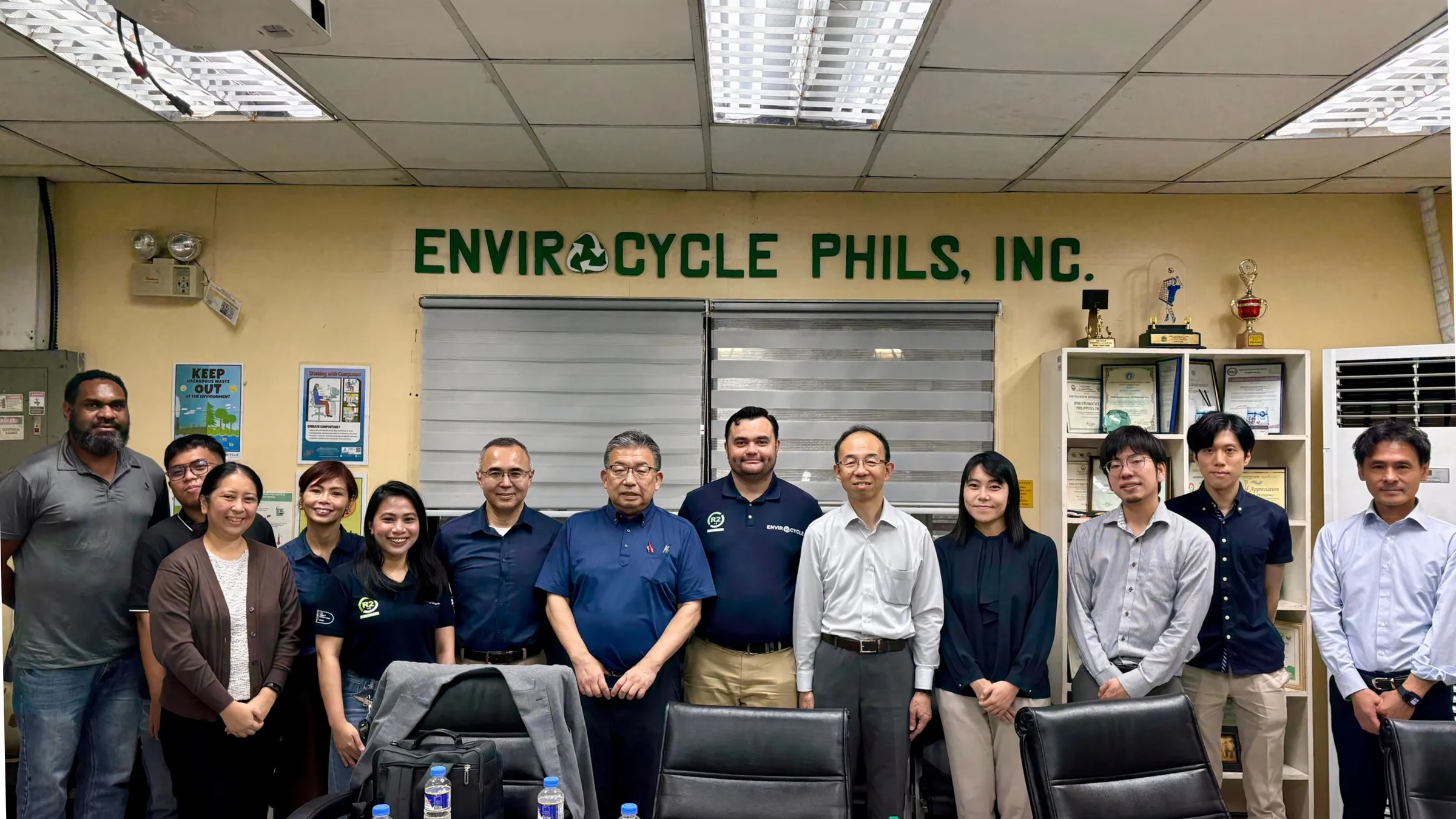
Envirocycle welcomes Japan’s Ministry of the Environment for a facility visit and technical exchange supporting sustainable household e-waste management.
On October 16, 2026, Envirocycle Philippines, Inc. welcomed representatives from Japan’s Ministry of the Environment (MOEJ), including Vice Minister for Global Environmental Affairs Takeshi Sekiya, to its facility in Canlubang, Calamba City, Laguna.
The visit formed part of the Sustainable E-waste Management and Recycling bilateral cooperation between MOEJ and the Philippines’ Department of Environment and Natural Resources (DENR). Now in its third year, the cooperation combines policy discussions, technical exchanges, and practical pilot activities to strengthen environmentally sound management of waste electrical and electronic equipment (WEEE).
Strengthening Philippines – Japan Cooperation for Responsible E-Waste Management
Envirocycle welcomes Japan’s Ministry of the Environment for a facility visit and technical exchange supporting sustainable household e-waste management.
On October 16, 2026, Envirocycle Philippines, Inc. welcomed representatives from Japan’s Ministry of the Environment (MOEJ), including Vice Minister for Global Environmental Affairs Takeshi Sekiya, to its facility in Canlubang, Calamba City, Laguna.
The visit formed part of the Sustainable E-waste Management and Recycling bilateral cooperation between MOEJ and the Philippines’ Department of Environment and Natural Resources (DENR). Now in its third year, the cooperation combines policy discussions, technical exchanges, and practical pilot activities to strengthen environmentally sound management of waste electrical and electronic equipment (WEEE).
Connecting cooperation with practical operations
The visit opened with an overview of Envirocycle’s operations and approach to resource recovery and equipment life extension.
During the facility tour, delegates observed asset tracking, material processing, secure IT asset management, refurbishment, and appliance handling activities. These provided opportunities to discuss how collection, reuse, recycling, and responsible treatment contribute to a circular economy.
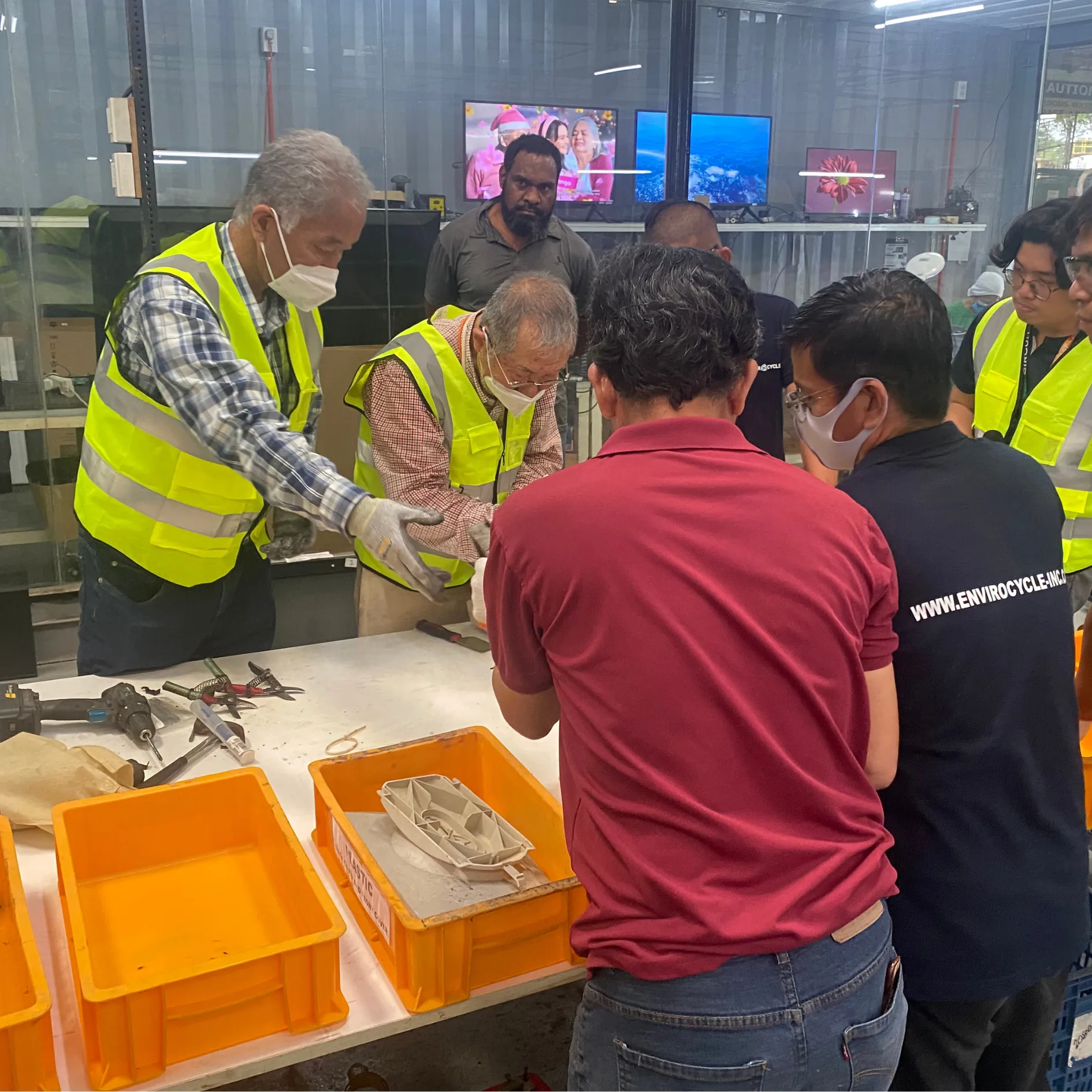
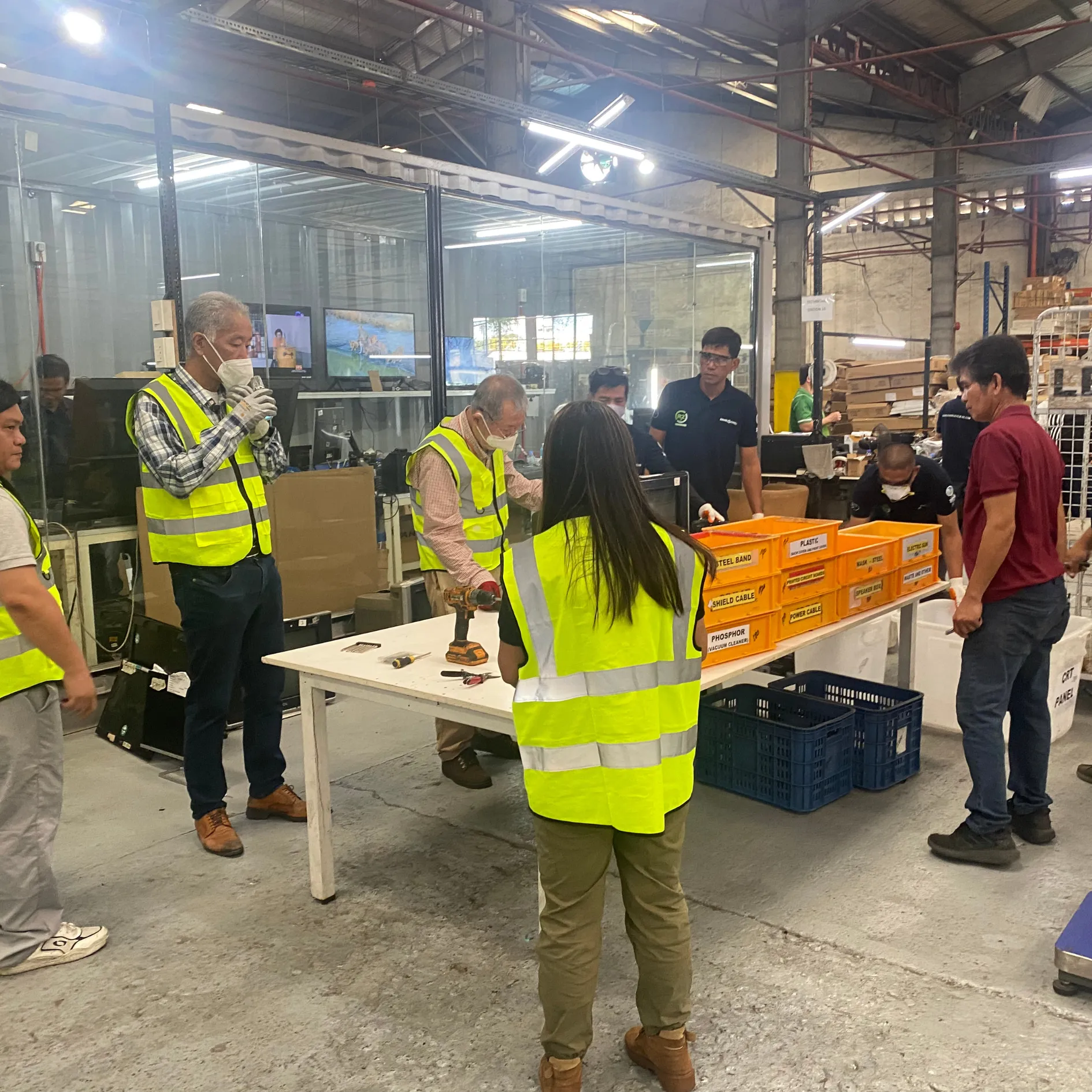
The delegation also visited the training area, where CRT and flat-screen television and monitor dismantling activities were taking place under the household e-waste pilot project.
Connecting cooperation with practical operations
The visit opened with an overview of Envirocycle’s operations and approach to resource recovery and equipment life extension.
During the facility tour, delegates observed asset tracking, material processing, secure IT asset management, refurbishment, and appliance handling activities. These provided opportunities to discuss how collection, reuse, recycling, and responsible treatment contribute to a circular economy.
The delegation also visited the training area, where CRT and flat-screen television and monitor dismantling activities were taking place under the household e-waste pilot project.
Contributing industry experience to the pilot
Envirocycle is one of the initiative’s partner recyclers, contributing practical experience in dismantling, material recovery, and material composition analysis.
The broader pilot covers air conditioners, refrigerators, washing machines, televisions and monitors, personal computers and laptops, and mobile phones through different collection and processing arrangements.
The activities seek to answer practical questions: What materials can be recovered? What collection, dismantling, and treatment costs are involved? What arrangements can make responsible household e-waste management financially sustainable?
The findings are intended to inform Philippine policy development and technical guidance on environmentally sound WEEE management, including discussions on future extended producer responsibility approaches.
Addressing challenges through collaboration
Discussions during the visit explored opportunities to expand collection partnerships, improve recovery practices, and address challenges involving refrigerant management and the treatment of difficult material streams.
The exchange highlighted the need to connect environmental objectives with workable technologies, appropriate downstream outlets, and sustainable business models.
For Envirocycle, participation provides an opportunity to contribute operational knowledge while learning from Japanese technical expertise and the experience of other project partners.
Continuing the partnership
Envirocycle thanks Vice Minister Sekiya, the MOEJ delegation, the Embassy of Japan in the Philippines, the consultant team, and participating partners for the visit and exchange.
We also acknowledge our operations and technical teams for supporting the facility tour and pilot activities.
Through continued cooperation, Envirocycle remains committed to advancing responsible electronics recycling, extending equipment life, and recovering valuable resources.