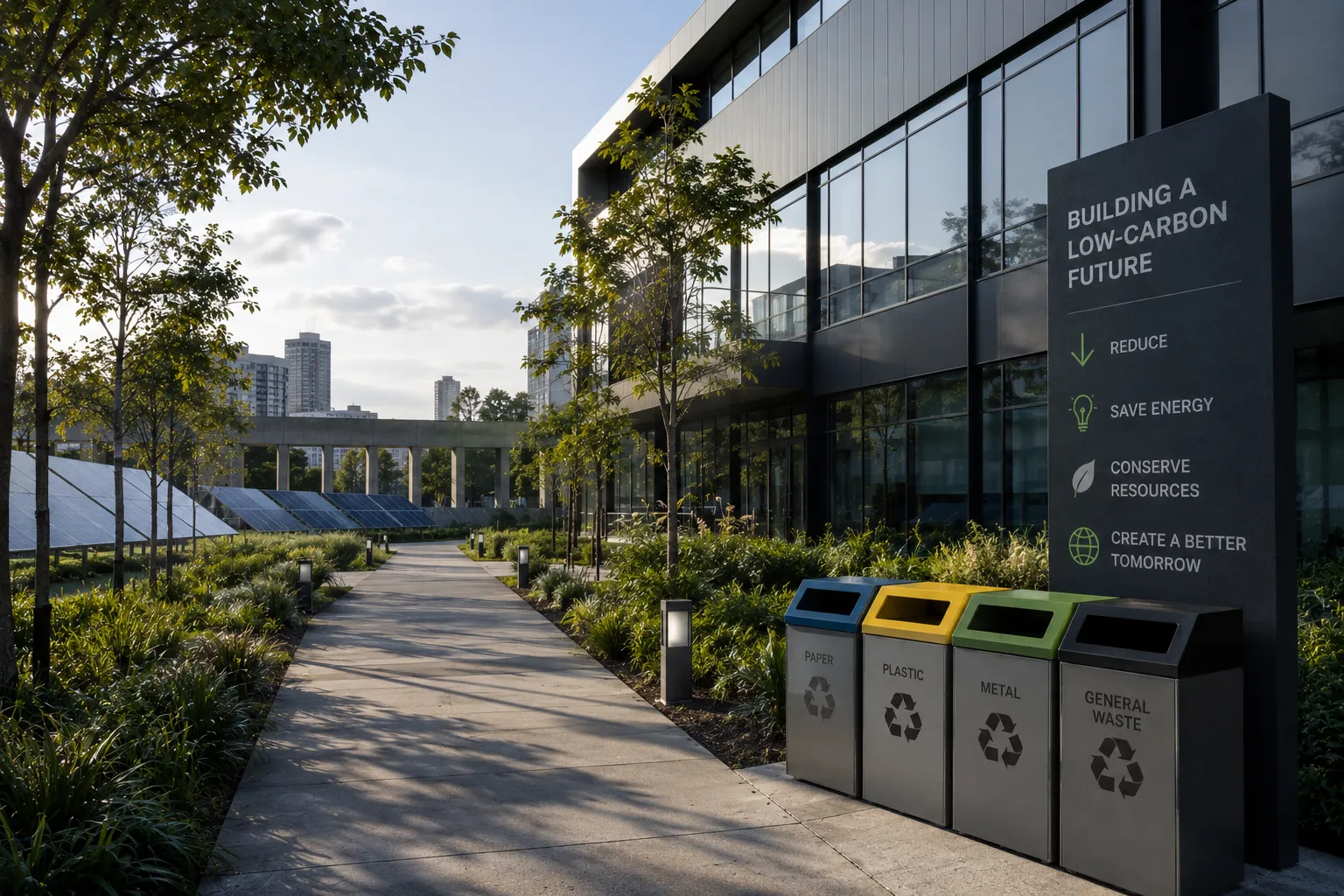
Businesses today are under increasing pressure to reduce their environmental impact. Customers are making more sustainable purchasing decisions, investors are paying closer attention to Environmental, Social, and Governance (ESG) performance, and organizations across industries are looking for practical ways to improve efficiency while reducing waste.
The transition to a low-carbon economy is no longer a distant goal—it is already influencing how businesses operate, invest, and plan for the future.
The good news is that preparing for a low-carbon future doesn't require a complete transformation overnight. Many of the most effective changes begin with practical improvements that reduce waste, improve resource efficiency, and support long-term business resilience.
For businesses in the Philippines, taking these first steps today can create lasting operational, environmental, and competitive advantages.
What Is a Low-Carbon Business?
A low-carbon business is one that actively works to reduce the greenhouse gas emissions associated with its operations while using resources more efficiently.
This doesn't necessarily mean making large investments in new technology. Instead, it often involves improving everyday business practices, reducing unnecessary waste, and making better use of existing resources.
Examples include:
- Upgrading to energy-efficient equipment
- Reducing paper consumption
- Improving recycling programs
- Purchasing products more responsibly
- Extending the useful life of equipment
- Managing retired IT assets responsibly
Rather than focusing on a single initiative, successful organizations view sustainability as a continuous process of improvement.
Why More Businesses Are Taking Action
Reducing environmental impact is no longer driven solely by regulation.
Today, organizations are responding to a variety of business priorities, including:
- Growing customer expectations for environmentally responsible businesses
- Increasing ESG reporting requirements
- Sustainability assessments from multinational clients
- Rising energy and operational costs
- Corporate climate commitments
- The need to remain competitive in evolving markets
As these expectations continue to grow, sustainability is becoming an essential part of effective business management.
Small Changes Can Create Big Results
One of the biggest misconceptions about sustainability is that meaningful progress requires major investments.
In reality, many organizations achieve measurable improvements by introducing practical initiatives that are simple to implement and easy to maintain.
Examples include:
- Switching to energy-efficient lighting
- Reducing unnecessary printing
- Installing clearly labeled recycling stations
- Encouraging responsible purchasing practices
- Reusing office furniture and equipment whenever practical
- Maintaining machinery to extend its service life
- Reviewing waste management procedures regularly
While each initiative may seem small on its own, together they can reduce costs, improve efficiency, and significantly reduce waste.
Don't Overlook Electronic Waste
Technology supports nearly every aspect of modern business, but it also generates one of the world's fastest-growing waste streams—electronic waste, or e-waste.
As businesses replace computers, laptops, servers, mobile devices, networking equipment, and other electronics, responsible disposal becomes increasingly important.
Leaving obsolete equipment in storage or disposing of it with general waste can create unnecessary environmental and operational challenges.
Responsible e-waste management helps organizations:
- Recover valuable materials
- Reduce waste sent to landfill
- Support circular economy initiatives
- Protect sensitive business information
- Demonstrate responsible environmental practices
For many businesses, managing electronic waste responsibly is one of the simplest ways to begin strengthening their sustainability program.
Think Beyond Recycling
Recycling plays an important role in sustainability, but today's businesses are taking a broader approach to resource management.
Before disposing of equipment, organizations are asking questions such as:
- Can it be repaired?
- Can it be refurbished?
- Can valuable materials be recovered?
- Can future waste be reduced through smarter purchasing decisions?
These questions reflect the principles of the circular economy, where products and materials remain in use for as long as possible before being responsibly recovered and recycled.
Thinking beyond disposal helps maximize the value of existing assets while reducing the need for new raw materials.
Data Security and Sustainability Can Work Together
When retiring IT equipment, environmental responsibility should go hand in hand with data security.
Computers, servers, laptops, and storage devices often contain confidential business information that must be securely destroyed before recycling takes place.
Professional IT Asset Disposition (ITAD) services combine certified data destruction with environmentally responsible recycling and resource recovery, allowing businesses to protect sensitive information while reducing environmental impact.
This integrated approach supports both cybersecurity and sustainability objectives.
Building a Workplace Culture of Sustainability
Long-term environmental success depends on employee engagement.
Providing clearly labeled recycling stations, introducing e-waste collection programs, sharing sustainability goals, and encouraging employee participation all help create a workplace culture where environmental responsibility becomes part of everyday operations.
Simple initiatives—such as recognizing employee contributions or discussing sustainability during team meetings—can encourage lasting behavioral change.
When employees understand the purpose behind these efforts, they are more likely to support them both at work and at home.
Choosing the Right Sustainability Partner
Many organizations rely on experienced environmental service providers to help achieve their sustainability objectives.
Whether managing electronic waste, recovering valuable materials, or securely retiring IT assets, choosing the right partner helps ensure materials are handled responsibly, transparently, and in accordance with applicable regulations.
An experienced provider can also support ESG reporting by offering documentation, secure handling procedures, and responsible recycling solutions.
Looking Ahead
Preparing for a low-carbon future is no longer simply about meeting environmental expectations—it's about building a stronger, more resilient business.
Organizations that reduce waste, improve resource efficiency, and responsibly manage end-of-life equipment are often better positioned to adapt to changing regulations, strengthen customer relationships, and support long-term growth.
The journey toward sustainability doesn't have to begin with large-scale investments. Practical improvements made consistently over time can create measurable benefits for both the business and the environment.
At Envirocycle, we help organizations take practical steps toward their sustainability goals through secure IT Asset Disposition (ITAD), responsible e-waste recycling, and resource recovery solutions. Whether your business is just beginning its environmental journey or expanding an existing ESG program, responsible electronic waste management is an effective way to support a low-carbon future while protecting valuable resources.