When people think about plastic recycling, they often picture an empty PET bottle being placed into a recycling bin and eventually becoming another plastic product.
But plastic waste is much broader than bottles.
Businesses and households generate food packaging, containers, industrial plastics, plastic components, flexible packaging, damaged plastic products, and the small plastic sachets that are part of everyday life in the Philippines.
Some of these materials have relatively established recycling pathways. Others are considerably more difficult to collect, sort, process, and recover.
So what happens to plastic that cannot simply enter a conventional recycling stream?
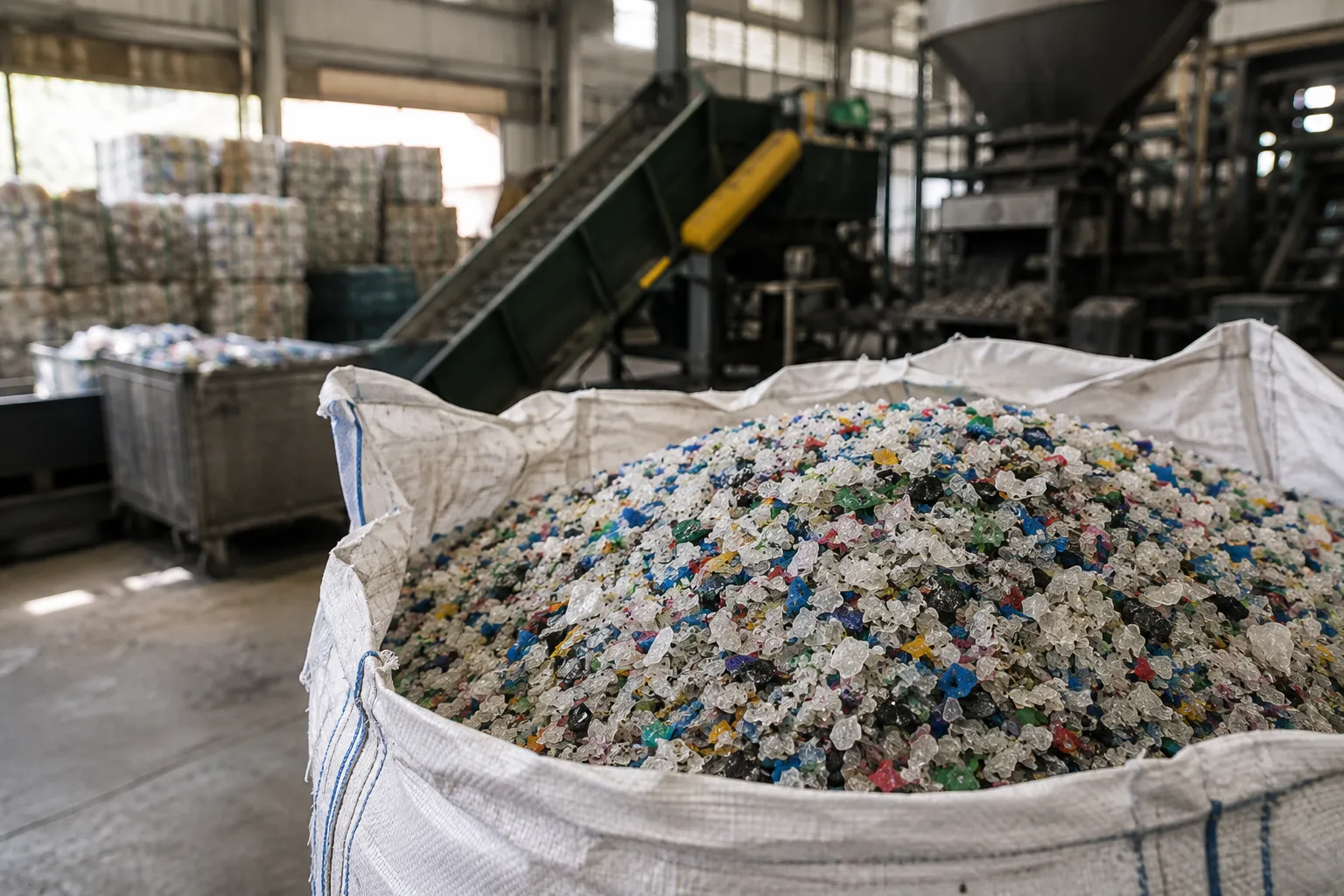
One possible step is plastic shredding and material preparation.
Suitable plastic waste can be sorted and prepared before being shredded into smaller pieces that are easier to handle and transport for further processing. Shredding does not, by itself, turn plastic waste into a finished recycled product. Instead, it can help prepare material for the next stage of its recovery journey.
And that raises an important question:
What happens to shredded plastic after it leaves the shredder?
Not All Plastic Waste Is the Same
Before discussing plastic shredding or recycling, it is important to understand one basic fact:
Plastic is not one single material.
Different polymers have different physical and chemical properties, which means they can have different collection, sorting, processing, and recycling requirements.
Common plastic types include PET, HDPE, LDPE, PP, PS, PVC, and others. Some packaging can also contain multiple layers or combinations of plastic and other materials.
This is particularly important when dealing with post-consumer plastic waste.
A mixed pile of plastic may look like one type of waste to the average person, but a recycler or downstream processor may see several different material streams.
The type of plastic, its condition, contamination level, and composition can all affect what happens next.
That is why proper identification, segregation, and material preparation are important parts of plastic waste recovery.
The Sachet Challenge in the Philippines
Few examples illustrate the complexity of plastic waste better than the humble sachet.
Sachets are widely used for products such as:
- Shampoo
- Detergent
- Personal-care products
- Food products
- Beverages
- Household products
They are lightweight, convenient, and affordable, which has helped make them common in the Philippine market.
However, their small size and material composition can also make them more challenging to recover through conventional recycling systems.
This issue is recognized under the Philippines' Extended Producer Responsibility Act of 2022, or RA 11898.
The law specifically includes sachets, labels, laminates, and other flexible plastic packaging, whether single-layer or multilayered with plastics or other materials, within the plastic packaging covered by the EPR framework.
That distinction is important.
A sachet should not automatically be treated like a PET bottle simply because both are made from plastic.
Different materials may require different collection, sorting, preparation, and downstream recovery approaches.
The challenge is therefore not simply collecting sachets.
It is determining how suitable materials can be recovered and what the most appropriate pathway is for them.
Where Does Plastic Shredding Fit Into the Process?
Plastic shredding is best understood as one step within a larger material-recovery process.
A simplified process might look like this:
Collection
↓
Sorting and Identification
↓
Material Preparation
↓
Plastic Shredding
↓
Further Processing
↓
Appropriate Recovery or Recycling Pathway
The exact process can vary significantly depending on the type and condition of the material.
Some plastics may require additional sorting.
Others may require cleaning or drying.
Some may need further processing before they can be accepted by a downstream processor.
This is why it is important not to think of a shredder as the point where "recycling happens."
Shredding prepares the material.
What happens afterward depends on the material and the capabilities and requirements of the next processor.
What Happens to Shredded Plastic?
There is no single answer.
The next step depends on factors such as:
- Type of polymer
- Material composition
- Degree of contamination
- Moisture content
- Whether the material is single-layer or multilayer
- Quantity available
- Quality requirements of the downstream processor
- Available recovery pathways
For suitable materials, shredded plastic can potentially serve as prepared feedstock for further processing.
A downstream processor may further sort, clean, process, or transform the material according to its own manufacturing or recovery requirements.
The important point is that the shredded material does not necessarily have to become the same type of product it originally came from.
That is one of the basic ideas behind a circular economy:
Materials can move into new applications instead of immediately becoming waste destined for disposal.
Plastic Recycling Is More Than Making New Plastic Products
The word "recycling" is often used as though it describes one simple process.
In reality, plastic recovery can involve several stages and different pathways.
Depending on the material, these can include:
- Collection
- Sorting
- Material preparation
- Shredding
- Cleaning
- Further processing
- Recycling
- Reuse
- Other appropriate recovery or diversion methods
This is particularly relevant for flexible plastic waste and sachets, where the material may not be as straightforward to recover as a rigid plastic bottle.
The goal should not be to claim that every piece of plastic can be turned into a new plastic product.
Instead, responsible recovery asks a more practical question:
What is this material, and what is the most appropriate recovery pathway available for it?
That approach is more realistic—and ultimately more useful.
What About Difficult-to-Recycle Plastic?
Some plastic waste can be difficult to recover through conventional mechanical recycling.
This may be due to contamination, mixed materials, low material value, complex packaging structures, or the lack of a suitable downstream market.
That does not automatically mean every difficult-to-recycle plastic should be sent to landfill.
Depending on the material and available infrastructure, other recovery or diversion options may exist.
One example is co-processing, where qualified residual waste can be used as an alternative fuel or raw material in cement manufacturing.
The Department of Environment and Natural Resources has recognized co-processing as one potential approach for qualified residual waste, including certain plastic waste, within the Philippine waste-management landscape.
However, it is important to distinguish this from conventional material recycling.
When suitable plastic is used for energy recovery through co-processing, it is not being turned back into a new plastic product.
Instead, its energy and, where applicable, mineral content are recovered within another industrial process.
This is why responsible plastic waste management requires looking at the specific material and the appropriate recovery pathway, rather than assuming that one solution works for everything.
Recyclable, Recoverable, and Reusable Are Not the Same Thing
These terms are often used interchangeably, but they can mean different things.
When someone asks:
"Can this plastic be recycled?"
they may actually be asking several questions:
- Can it be collected?
- Can it be properly sorted?
- Can it be processed?
- Is there a downstream processor that accepts it?
- Can its material value be recovered?
- Can it be reused?
- Is there a viable market for the recovered material?
- Is recycling the most appropriate option for this particular waste stream?
Those questions do not always have the same answer.
A material may technically be recyclable but difficult to collect economically.
Another material may be recoverable through a different process.
And another may have limited recovery options because of its composition or contamination.
This is especially relevant when dealing with flexible plastic waste and sachets.
The more realistic objective is therefore not:
"Everything can be recycled."
It is:
"Identify the material, prepare it properly, and determine the most appropriate recovery pathway."
Why Plastic Shredding Matters
It can be tempting to think that shredding simply means making plastic smaller.
But proper plastic shredding can serve an important role in preparing material for what comes next.
Reducing suitable plastic waste into smaller, more manageable pieces can make the material easier to handle and potentially prepare for downstream processing, depending on the requirements of the receiving processor.
However, the quality of the material entering the shredder matters.
Contamination, moisture, mixed polymers, labels, residues, and other materials can affect how the shredded material can be handled afterward.
That means responsible plastic recovery starts before the shredding stage.
Proper collection, segregation, identification, and preparation can help create a better starting point for the next step in the recovery chain.
From Sachet Waste to Material Recovery
Consider what happens to a used sachet.
Its original purpose may have been to contain shampoo, detergent, food, or another consumer product.
Once the product has been used, the packaging becomes waste.
But that doesn't necessarily mean its story has to end there.
Where a suitable recovery pathway exists, the material can potentially go through:
Collection → Sorting → Preparation → Shredding → Further Processing → Recovery
The exact pathway depends on the material and the downstream processor.
This is the important part.
We should not promise that every sachet can become a particular finished product.
Instead, the focus should be on recovering suitable materials and directing them toward appropriate downstream applications or recovery processes.
That is a much more practical way of thinking about plastic waste.
How Envirocycle Can Help
This is where Envirocycle's role is important—but it is also important to be clear about what that role is.
Envirocycle can support businesses with plastic waste preparation and shredding for suitable plastic materials.
The objective is not simply to shred plastic and consider the job finished.
Instead, shredding can serve as a step that helps prepare suitable plastic waste for the next stage of the recovery chain.
Depending on the material and project requirements, Envirocycle can help businesses manage suitable plastic waste through material preparation and shredding before the material moves to an appropriate downstream processor.
This can be particularly relevant for businesses looking for more responsible ways to manage plastic packaging waste, flexible plastic waste, and other suitable plastic materials.
The downstream processor determines what further processing or application is appropriate based on the material received.
That distinction is important because Envirocycle does not need to manufacture the final product for the material-preparation process to have value.
Circular economy systems work because different organizations can contribute different capabilities.
One organization may collect the material.
Another may sort it.
Another may prepare and shred it.
A downstream processor may then perform additional processing.
And another organization may ultimately use the recovered material in a new application.
Each step can help keep resources moving through the recovery chain.
Supporting Plastic Waste Recovery in the Philippines
Plastic waste management is becoming an increasingly important part of environmental discussions in the Philippines.
RA 11898, the Extended Producer Responsibility Act of 2022, established an EPR framework focused on plastic packaging waste and requires covered large enterprises to implement programs for the recovery and diversion of their plastic packaging footprint. The law sets recovery targets that increase over time, reaching 80% beginning in 2028.
This creates a growing need for practical systems that can help move plastic packaging waste from collection toward appropriate recovery pathways.
Material preparation is one part of that system.
For businesses managing significant quantities of plastic waste, having access to appropriate sorting, preparation, shredding, and downstream recovery solutions can help make their waste-management programs more structured and measurable.
It also supports the broader concept behind EPR and the circular economy: moving materials away from disposal and toward recovery wherever appropriate and feasible.
A More Practical Way to Think About Plastic Recycling
Plastic recycling is sometimes presented as a simple process:
Use → Dispose → Recycle
In reality, the journey can be much more complicated.
Different plastics require different approaches.
Some materials have established recycling markets.
Others require specialized preparation.
Some flexible packaging may require additional processing.
And some materials may have recovery options other than conventional material recycling.
The better approach is to look at the material itself and ask:
What is it made of?
How can it be properly prepared?
What recovery pathway is available?
Who can process it after that?
Those questions help create a more realistic approach to plastic waste management.
Building the Next Step in the Circular Economy
Plastic waste does not have to be viewed only as something that needs to disappear.
For suitable materials, it can be viewed as a resource that needs to be properly prepared for its next stage.
That is where collection, sorting, material preparation, and plastic shredding can make a difference.
Envirocycle can help businesses take that step by supporting plastic waste preparation and shredding for suitable materials, helping move them toward an appropriate downstream recovery pathway.
The company does not need to manufacture the final recycled product for this process to contribute to the circular economy.
The important thing is creating a connection between plastic waste and the next stage of its recovery.
Because the goal isn't simply to make plastic waste smaller.
The goal is to give suitable materials a better opportunity to remain in circulation.
And sometimes, that journey starts with something as simple as properly preparing a pile of plastic waste for what comes next.