The gaming industry is built around entertainment, technology, security, and trust. Whether we're talking about casinos, resorts, gaming venues, esports organizations, gaming cafés, or game developers, businesses in this industry rely on a wide range of equipment to keep operations running.
Computers and servers are only part of the picture.
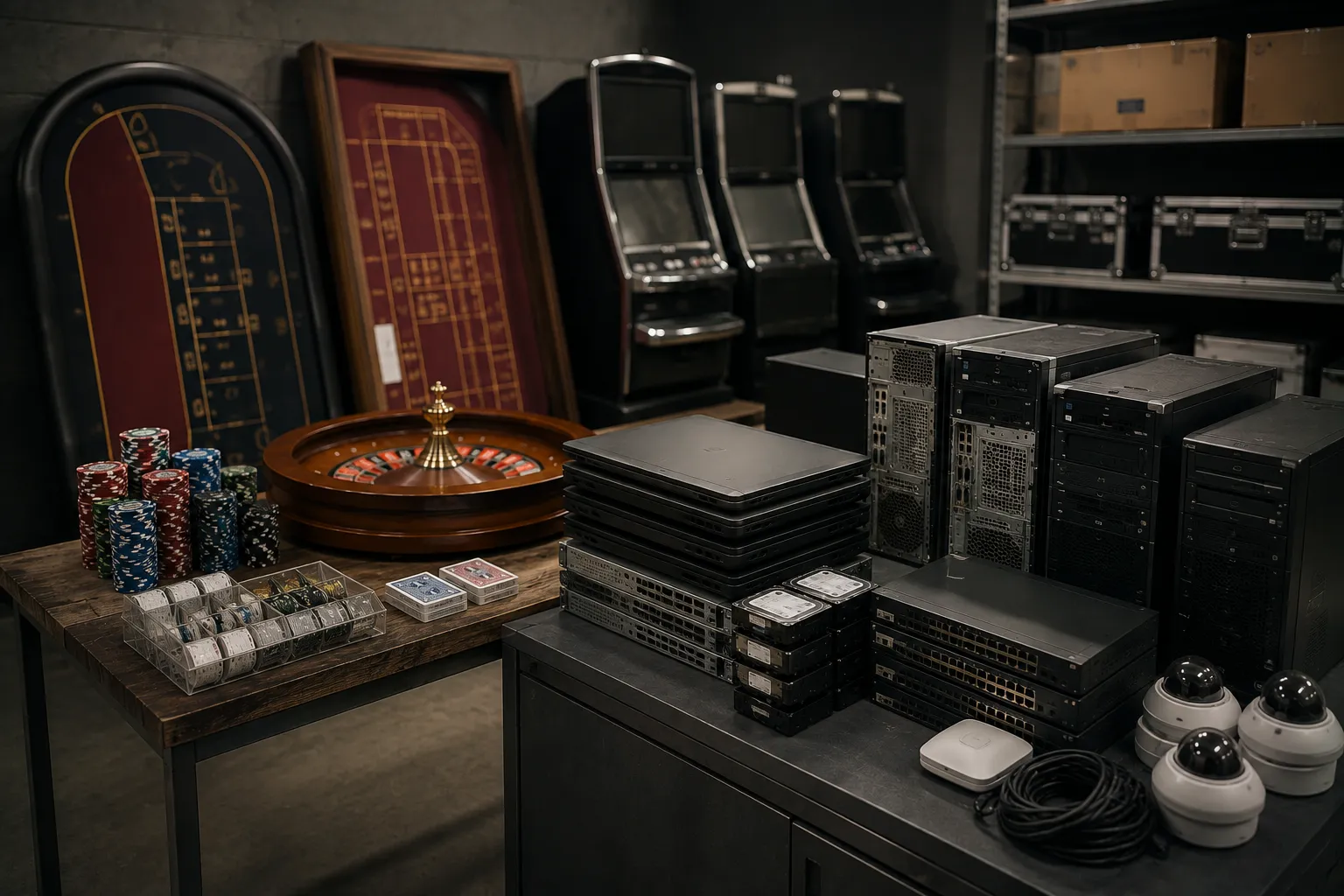
A gaming operation may also have slot machines, gaming tables, card decks, chips, table layouts, player-tracking equipment, payment systems, networking equipment, surveillance technology, and countless other physical and electronic assets.
Eventually, some of these assets reach the end of their useful life.
When that happens, simply throwing equipment away, sending it to storage, or selling it as surplus may not always be appropriate. Certain assets may contain sensitive information, proprietary technology, confidential materials, or components that the organization does not want returned to circulation.
This is where Assured Destruction Services can play an important role.
Assured destruction provides a controlled way to permanently destroy designated assets or data-bearing media, helping businesses reduce the risk of unauthorized access, reuse, or recovery.
What Is Assured Destruction?
Assured Destruction is the controlled and verifiable destruction of designated assets, materials, or data so that they can no longer be used or recovered in their original form.
The exact destruction method depends on the asset and the reason it needs to be destroyed.
For data-bearing equipment, this may involve secure data sanitization or physical destruction of storage media. For physical gaming assets, it may involve dismantling, shredding, crushing, or other appropriate destruction methods.
The objective is simple:
Once an asset has been designated for destruction, the organization should have confidence that it will not simply reappear somewhere else in usable form.
For gaming businesses, that can be particularly important because their assets can involve both valuable information and physical equipment associated with gaming operations.
Why the Gaming Industry Has Unique Destruction Requirements
Gaming businesses manage a combination of technology, physical assets, confidential information, and equipment that can have value even after it has been removed from service.
Consider everything that can eventually need to be retired:
- Gaming tables
- Poker tables
- Baccarat tables
- Blackjack tables
- Roulette equipment
- Playing cards
- Table layouts and gaming felts
- Gaming chips and tokens
- Slot machines
- Slot machine cabinets and components
- Player-tracking equipment
- Gaming terminals
- Servers
- Gaming PCs
- Hard drives and SSDs
- Networking equipment
- CCTV and surveillance equipment
- Payment and transaction systems
- Point-of-sale equipment
- Employee computers and mobile devices
Not all of these assets present the same risks, and not all necessarily need to be destroyed.
However, when a gaming organization determines that an asset must not be reused, resold, or returned to circulation, assured destruction provides a controlled way to permanently retire it.
Protecting Sensitive Data Is Only Part of the Picture
Gaming companies can handle significant amounts of sensitive information.
Depending on the organization, this can include:
- Customer information
- Player accounts
- Loyalty program information
- Payment information
- Employee records
- Financial information
- Surveillance data
- Internal reports
- Gaming operations data
- Business strategies
- Software and system information
Retired computers, servers, storage devices, networking equipment, and other technology may contain information even after the equipment has been removed from active service.
Deleting files or performing a basic reset should not automatically be treated as equivalent to a complete data sanitization process. NIST's current media-sanitization guidance emphasizes selecting appropriate sanitization and disposal methods based on the sensitivity of the information and the characteristics of the media.
For highly sensitive equipment, physical destruction of the storage media may be the appropriate final step.
Gaming Tables and Physical Gaming Equipment May Need Destruction Too
This is one area where assured destruction in the gaming industry goes beyond traditional ITAD.
Gaming tables can contain more than just wood, fabric, and metal.
A casino or gaming operator may eventually retire:
- Poker tables
- Baccarat tables
- Blackjack tables
- Roulette tables
- Table layouts
- Gaming felts
- Table signage
- Proprietary table components
- Electronic table components
- Accessories associated with gaming operations
In some situations, the organization may want these assets destroyed rather than resold or reused.
For example, a gaming operator may not want an old table layout, branded gaming material, or proprietary component appearing in another venue without authorization.
Assured destruction can provide a controlled process for dismantling and destroying designated gaming assets so that they are not simply passed along as ordinary secondhand equipment.
Playing Cards and Other Gaming Materials
Playing cards may seem insignificant compared with a slot machine or gaming table, but they can still become part of a gaming organization's asset-disposition process.
Used or retired playing cards may be marked, altered, damaged, or otherwise designated for destruction rather than reuse.
The same consideration can apply to certain gaming materials, promotional items, table layouts, signage, and other physical assets that an operator does not want redistributed.
Rather than simply throwing these materials into general waste, organizations can establish a controlled destruction process for assets that have been designated for destruction.
The goal isn't necessarily that every old deck of cards requires a specialized destruction service. Rather, it is about having a controlled process when the organization determines that particular gaming materials should not return to circulation.
Slot Machines: More Than Just a Cabinet
Slot machines are another excellent example of why gaming-industry assured destruction can go beyond traditional ITAD.
A slot machine can contain numerous components, including:
- Main cabinets
- Displays
- Control boards
- Logic boards
- Storage devices
- Memory components
- Bill validators
- Ticket or receipt systems
- Coin-handling components
- Touchscreens
- Networking components
- Power supplies
- Internal wiring
- Electronic controls
Some of these components may contain data or proprietary technology, while others may simply be valuable electronic or recyclable materials.
When a machine is being permanently retired, the organization may need to determine which components should be sanitized, destroyed, recycled, or recovered for value.
This is where a structured asset-disposition process becomes especially useful.
Instead of treating the entire machine as one piece of waste, the equipment can be assessed component by component.
Assured Destruction and IT Asset Disposition Work Together
This is where ITAD remains an important part of the article.
Gaming companies have extensive technology infrastructure, and retired IT equipment should be handled with the same level of care as other sensitive business assets.
Common IT assets requiring secure disposition can include:
- Gaming PCs
- Development workstations
- Servers
- Laptops
- Hard drives
- SSDs
- USB drives
- Network-attached storage
- Routers
- Network switches
- Mobile devices
- POS systems
- Payment terminals
- Surveillance systems
For data-bearing equipment, organizations can determine whether the asset should be sanitized for reuse or physically destroyed.
The appropriate approach depends on the storage technology, sensitivity of the information, and intended final disposition. NIST's media-sanitization guidance specifically distinguishes between sanitization approaches and physical destruction rather than treating every storage device in exactly the same way.
Protecting Intellectual Property
Gaming companies also have another asset that can be extremely valuable: intellectual property.
For game developers and technology companies, retired equipment may contain:
- Source code
- Game builds
- Development files
- Character designs
- Artwork
- Music
- Game assets
- Testing environments
- Product roadmaps
- Unreleased content
For casinos and gaming operators, proprietary technology, operating information, system configurations, and other confidential materials can also require protection.
A retired device should therefore not automatically be treated as harmless simply because it is no longer connected to the company's network.
Secure sanitization or destruction can help protect sensitive information throughout the entire asset lifecycle.
Why Physical Destruction Can Matter
There are situations where an organization doesn't simply want an asset wiped—it wants the asset itself permanently removed from circulation.
Physical destruction can be appropriate when:
- The asset has reached the end of its useful life
- The organization does not want the equipment reused
- The equipment contains highly sensitive storage media
- Proprietary components should not be redistributed
- Gaming materials should not return to circulation
- The asset cannot be reliably sanitized
- The organization requires documented destruction
For data-bearing media, physical destruction can involve processes such as shredding or other controlled destruction techniques appropriate to the material.
For larger gaming equipment, destruction may involve dismantling the equipment first and then separating components for appropriate recycling or recovery.
The important thing is that destruction should be controlled and documented rather than treated as ordinary disposal.
What Happens to the Materials After Destruction?
Assured destruction doesn't necessarily mean that everything ends up in a landfill.
In fact, many gaming and electronic assets contain valuable materials that can potentially be recovered.
Depending on the equipment, materials may include:
- Steel
- Aluminium
- Copper
- Electronic components
- Plastics
- Wiring
- Other recoverable materials
After designated assets have been destroyed, appropriate materials can potentially be directed toward recycling or material recovery.
This creates an important balance:
Destroy what needs to be destroyed, while recovering what can still be responsibly recovered.
That approach can help organizations address both security and environmental responsibilities.
Choosing the Right Assured Destruction Provider
Because gaming assets can range from playing cards to complete electronic gaming systems, businesses should look beyond providers that only offer traditional hard-drive destruction.
When selecting an assured destruction partner, organizations should consider whether the provider can support:
- Secure data destruction
- Physical destruction of storage media
- IT asset disposition
- Destruction of designated gaming equipment
- Controlled handling of physical gaming materials
- Asset identification and tracking
- Chain-of-custody documentation
- Certificates of destruction
- Responsible electronics recycling
- Material recovery
- Appropriate environmental and regulatory compliance
A good destruction program should also provide clear documentation showing what was processed, how it was handled, and when the destruction was completed.
How Envirocycle Can Help
Gaming organizations often have a mixture of assets that cannot all be handled in exactly the same way.
A retired server may require secure data destruction.
An old slot machine may need to be dismantled and its components assessed.
A gaming table may be designated for physical destruction.
Electronic components may need to be separated for responsible recycling.
This is where Envirocycle's IT Asset Disposition, secure data destruction, and responsible recycling capabilities can support a more comprehensive asset-disposition strategy.
Envirocycle can help businesses manage retired technology through appropriate data destruction, asset processing, and responsible recycling. Where physical destruction is required, designated assets can be processed according to the organization's requirements, with documentation provided for the completed service.
For gaming organizations, this approach can extend beyond computers and hard drives to include electronic gaming equipment, retired gaming assets, and other materials that the organization has determined should not be returned to circulation, subject to the specific scope and requirements of the project.
The goal is not simply to make old equipment disappear.
It is to provide businesses with a controlled process for securely retiring assets, protecting sensitive information, and recovering materials responsibly wherever possible.
A Gaming Asset Doesn't Stop Being Sensitive Just Because It's Old
In the gaming industry, an asset can have value long after it has stopped being used.
A retired server may contain sensitive information.
A slot machine may contain proprietary electronics.
A gaming table may carry branded or operational materials.
A deck of playing cards may be designated for destruction rather than reuse.
And an entire room full of retired equipment can represent a significant security, operational, and environmental responsibility.
That's why assured destruction should be viewed as more than just IT equipment destruction.
It is part of a broader asset-disposition strategy that helps gaming organizations determine what should be reused, what should be sanitized, what should be destroyed, and what can be responsibly recycled.
For an industry built around security, trust, and controlled operations, that approach makes sense.
When a gaming asset reaches the end of its useful life, the final step should be just as carefully managed as the first.