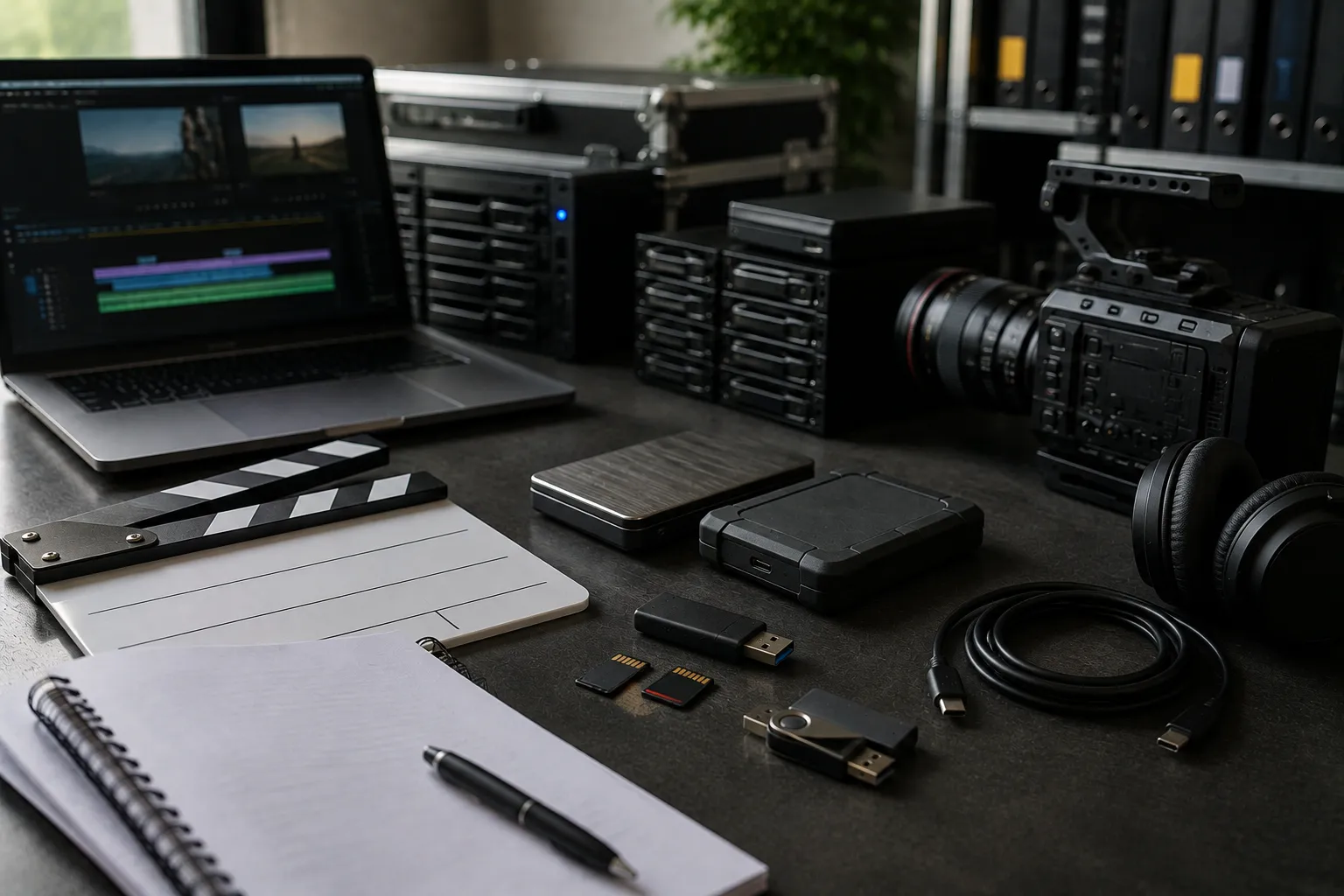
Film and television production is built around creativity, collaboration, and technology. Behind every movie, television series, commercial, or streaming production is a large amount of equipment and information that must be managed throughout the production process.
Cameras, editing workstations, servers, hard drives, memory cards, production computers, and other technology can hold valuable footage and confidential production materials. At the same time, physical documents such as scripts, storyboards, call sheets, contracts, and production materials may contain information that should not be allowed to circulate after a project is completed.
For a production company, simply throwing these items away may not be enough.
Unreleased footage, scripts, production plans, intellectual property, and other confidential materials can have significant value. This is why Assured Destruction Services can play an important role in the secure retirement of certain production assets.
What Is Assured Destruction?
Assured destruction is the controlled and verifiable destruction of designated assets, materials, or data so they cannot be reused, recovered, or accessed in their original form.
The appropriate method depends on what is being destroyed.
For data-bearing equipment, this may involve secure data sanitization or physical destruction of storage media. For physical materials, destruction may involve shredding, dismantling, or other appropriate processes.
The goal is to provide an organization with confidence that assets designated for destruction have been properly handled and will not simply end up in another person's hands.
For film and television productions, this can be particularly important because the value of an asset may not always be obvious.
A seemingly ordinary hard drive could contain an entire unreleased film.
A discarded script could reveal the plot of an upcoming television series.
A production computer could contain confidential contracts, financial information, or years of creative work.
Film Productions Handle More Sensitive Information Than You Might Expect
A production can generate an enormous amount of information throughout its lifecycle.
Depending on the project, this can include:
- Unreleased video footage
- Raw camera footage
- Edited scenes
- Final cuts
- Scripts and screenplays
- Storyboards
- Production schedules
- Casting information
- Contracts
- Financial documents
- Marketing plans
- Product placement agreements
- Location information
- Special effects files
- Animation and visual effects assets
- Audio recordings
- Promotional materials
- Internal communications
Much of this information may be confidential until a project is officially released.
Even after filming has finished, copies of production materials can remain on computers, external hard drives, servers, backup devices, and removable storage.
This makes secure data disposal an important consideration when production equipment is eventually retired or reassigned.
Protecting Unreleased Footage and Creative Assets
For a film or television production, unreleased footage can be one of its most valuable digital assets.
A production may spend months or even years creating a project before audiences ever see it. Raw footage, unfinished scenes, visual effects, and final edits can represent significant financial and creative investment.
If a storage device containing this material is improperly disposed of, the information could potentially be recovered.
Secure data sanitization or physical destruction can help production companies reduce this risk when storage devices are no longer required.
The appropriate approach depends on the sensitivity of the material and whether the equipment will be reused.
If a hard drive will be returned to service, secure sanitization may be appropriate.
If the organization has determined that the storage media should never be reused, physical destruction may be considered.
It's Not Just Hard Drives
When people hear "data destruction," they often immediately think about computers and hard drives.
Film and television productions, however, can use a much broader range of technology.
Assets may include:
- Editing workstations
- Production laptops
- Servers
- External hard drives
- SSDs
- USB drives
- Memory cards
- Network storage devices
- Backup drives
- Cameras and recording equipment
- Audio recording equipment
- Digital production equipment
- Mobile phones
- Tablets
- Networking equipment
Some of these devices may contain sensitive information even when they are no longer actively being used.
For example, a camera memory card may contain raw footage, while an editing workstation may contain project files, temporary files, cached footage, or other production information.
A proper asset-disposition process helps ensure that data-bearing equipment is identified and handled appropriately before it is recycled, reused, sold, or otherwise retired.
Physical Production Materials May Also Need Controlled Destruction
Assured destruction in the entertainment industry doesn't have to be limited to electronic equipment.
Film and television productions also generate large quantities of physical materials.
These may include:
- Scripts
- Draft scripts
- Storyboards
- Call sheets
- Production schedules
- Casting documents
- Contracts
- Confidential correspondence
- Production notes
- Marketing materials
- Branded materials
- Internal documents
Not every document needs to be destroyed, of course.
However, when a production company determines that certain materials are confidential or should no longer be distributed, they should be handled through an appropriate destruction process rather than simply placed in a general waste bin.
This is particularly important for unreleased projects and productions that have not yet been publicly announced.
Protecting Intellectual Property
Intellectual property is one of the most valuable assets in the entertainment industry.
A production can involve the work of writers, directors, actors, editors, cinematographers, animators, visual-effects teams, composers, designers, and countless other professionals.
The resulting intellectual property can include:
- Screenplays
- Characters
- Story concepts
- Artwork
- Music
- Visual effects
- Animation
- Editing projects
- Production designs
- Unreleased footage
Protecting these assets doesn't stop when filming ends.
Production companies should consider how confidential information is handled throughout its entire lifecycle—from creation and storage to eventual retirement and destruction.
Assured destruction can form part of that process by providing a controlled way to dispose of designated physical and digital assets.
Production Equipment Eventually Reaches the End of Its Life
Film and television equipment can be expensive, and production companies often invest heavily in technology.
Eventually, however, equipment may become:
- Outdated
- Damaged
- Obsolete
- Surplus
- No longer compatible with current workflows
- Too expensive to maintain
When this happens, companies may choose to sell, reuse, donate, recycle, or destroy the equipment.
The important consideration is that the disposition method should match the type of asset and the information it contains.
A production laptop may be suitable for reuse after proper data sanitization.
A damaged storage device containing unreleased footage may be better suited for physical destruction.
A camera may still have value and could potentially be refurbished.
Electronic components that cannot be reused may instead be directed toward responsible recycling and material recovery.
A structured approach helps organizations avoid treating every retired asset the same way.
Responsible Recycling After Destruction
Secure destruction and environmental responsibility don't have to be separate processes.
Many production assets contain materials that can potentially be recovered after they have been retired.
Electronic equipment may contain:
- Metals
- Plastics
- Circuit boards
- Copper wiring
- Aluminum
- Steel
- Other recoverable materials
Where appropriate, equipment can be processed so that sensitive components are securely destroyed while recoverable materials are directed toward responsible recycling.
This is particularly relevant for production companies looking to strengthen their Environmental, Social, and Governance (ESG) initiatives or incorporate sustainability into their production practices.
The objective is simple:
Protect what needs to be protected, destroy what needs to be destroyed, and recover what can responsibly be recovered.
What Should a Film or Television Production Look for in an Assured Destruction Provider?
When selecting an assured destruction or ITAD provider, production companies should look for a partner that can handle more than just basic electronic waste collection.
Important capabilities may include:
- Secure data sanitization
- Physical destruction of storage media
- IT Asset Disposition (ITAD)
- Asset inventory and tracking
- Chain-of-custody documentation
- Certificates of Data Destruction
- Responsible electronics recycling
- Material recovery
- Secure handling of confidential materials
- Appropriate environmental and regulatory compliance
Documentation is particularly useful for organizations that need to demonstrate that assets were properly processed.
Rather than simply saying that equipment was "thrown away," a documented destruction and recycling process provides a clearer record of what happened to the asset.
How Envirocycle Can Help
Film and television productions can have a wide variety of assets that require different end-of-life solutions.
Some equipment may still have value and be suitable for reuse or recovery.
Some storage devices may require secure data sanitization.
Other devices may need physical destruction because they contain sensitive or proprietary information.
Envirocycle can help organizations manage retired IT and electronic assets through secure data destruction, IT Asset Disposition, responsible electronics recycling, and material recovery solutions.
For production companies, this can include the secure processing of retired computers, workstations, servers, hard drives, SSDs, storage devices, and other electronic equipment that may contain confidential production information.
Where physical destruction is required, designated assets can be processed according to the organization's requirements, with appropriate documentation provided for completed services.
Envirocycle's approach also focuses on responsible resource recovery. Where assets or components can be recycled or recovered after secure processing, appropriate materials can be directed toward responsible recycling rather than unnecessary disposal.
This allows production companies to address two important responsibilities at the same time:
Protect sensitive information while managing retired equipment responsibly.
Secure Asset Disposal Is Part of the Production Lifecycle
Film and television production doesn't end when the cameras stop rolling.
After a project wraps, there can still be months or years of footage, documents, equipment, and other materials that need to be archived, transferred, reused, recycled, or destroyed.
Having a clear asset-disposition process helps production companies determine what should happen to those materials.
Some assets may be worth keeping.
Some may be suitable for reuse.
Some may need to be recycled.
And some may need to be permanently destroyed.
The important thing is having a process in place to make those decisions securely and responsibly.
For an industry where unreleased content, intellectual property, and confidential information can be extremely valuable, the final stage of an asset's lifecycle deserves just as much attention as its first.
Final Thoughts
Film and television productions create much more than the content audiences eventually see. Behind every production are computers, storage devices, cameras, scripts, contracts, footage, creative files, and countless other assets that may contain confidential or proprietary information.
When these assets reach the end of their useful life, simply throwing them away isn't always enough.
Assured Destruction Services can help production companies securely retire designated assets while reducing the risk of sensitive information being recovered or confidential materials being redistributed.
At the same time, responsible recycling and material recovery can help ensure that retired electronic equipment is managed with environmental responsibility in mind.
From an unreleased film stored on a hard drive to a confidential script sitting in a production office, protecting the work doesn't end when production does.
When the cameras stop rolling, the responsibility to protect the production doesn't stop with them.